
Website builders are a perfect solution for individuals, entrepreneurs, and small businesses to start a website without hiring a developer. However, finding the best website builder can be tricky for beginners.
There are so many website builders on the market, how do you know which one is the right solution for you? The true answer to the best website builder question will vary based on your specific needs.
In this article, we’ll help you choose the best website builder by going over the pros and cons of the most popular options.
We will be comparing the following website builders in this article. If you are interested in a particular website builder, then just click on the name to skip ahead.
- WordPress.org
- Web.com
- Wix
- HubSpot Website Builder
- WooCommerce
- Gator by HostGator
- Zyro
- Domain.com
- BigCommerce
- Shopify
- WordPress.com
- Squarespace
- Weebly
- Dreamhost Website Builder
- GoDaddy Website Builder
Choosing the Best Website Builder — What to Look for?
Before comparing the top website builders, we recommend that you write down what you want to do with your website? What are your goals and what features would you like to see on your website.
For example, you can write down things like: have a blog section, photo gallery, online store (eCommerce), reservation system, contact form, SEO features, social media features, etc.
If you are unsure about what you want, then check out your competitors or other websites for inspiration.
Most website builders offer an intuitive drag and drop user interface to build your new website. You can take advantage of the trial accounts (free plans), or the generous money-back guarantee to test drive before you make your final decision.
Next, you need to consider your growth options. Will you be adding regular updates to your website? Do you need a blog section? Would you be selling more products on your website in the future?
You need to make sure that the website builder you choose is capable of handling your needs as your business grows.
Criteria for Our Best Website Builder Review
We have helped over 400,000+ users start a website, and over the last two decades have tested just about every website builder on the market.
We look at several different criteria when reviewing the best website builder picks for each use-case, but our top five elements are:
- Ease of Use – We want to ensure that the website builder is easy to use for absolute beginners (non-techy users). It must come with a customizable drag-and-drop builder, powerful editing tools, and other design customization options.
- Pricing – Since it’s a competitive space, we look at which website builder offers the most value for the price. We ask questions like does it offer a free domain, free SSL, free business email, free eCommerce features, etc. If not, then how much would a small business owner has to spend on additional extras / hidden costs.
- Design & Features – We want to ensure that the website builder offers a good selection of professional website templates along with flexibility to add additional features like Google Analytics, CRM, third-party marketing tools, etc.
- Customer Support – While we expect website builder software to offer an intuitive user-friendly interface, we want to make sure that 24/7 customer support is available when needed.
- Data ownership & portability – Often beginners don’t think about this, but being in the industry for over two decades, we pay extra attention to terms of service and privacy policy to ensure that you own your data, and it’s portable should you need to switch.
That being said, let’s take a look at the best website builder software to start your website without hiring a developer or coding HTML from scratch.
1. WordPress
WordPress.org (also known as self hosted WordPress) is the world’s most popular website building platform. Over 43% of all websites on the internet are powered by WordPress.
It’s important to note that there are two versions of WordPress, self-hosted WordPress CMS and WordPress.com. We will talk about WordPress.com later in this article. You can also read our WordPress.org vs WordPress.com comparison for more details.
The self-hosted WordPress content management system (CMS) tops our list of best website builder due to its popularity, powerful features, scalability, and ease of use.
WordPress is a free and open source website builder. This means that you have maximum control over your website compared to any other online website builder in this list.
With WordPress, you have full ownership of your website without any third-party control, so it gives you maximum privacy.
This is why many popular websites like WhiteHouse.gov (US Government), CNN, The New York Times, Microsoft, and countless other small businesses use WordPress as their website builder.
Unlike other website builders in our list, you will need a WordPress hosting account and host your own website (this is a lot easier than it sounds). We have detailed instructions on how to get started with WordPress below.
Pros:
WordPress gives you complete control on every aspect of your website and online presence. It can be used to build any kind of website. For example, an eCommerce store, community forums, a social network, a membership website, business / corporate website, landing pages, and more.
There are thousands of high quality pre-made WordPress themes that you can use for your website’s design.
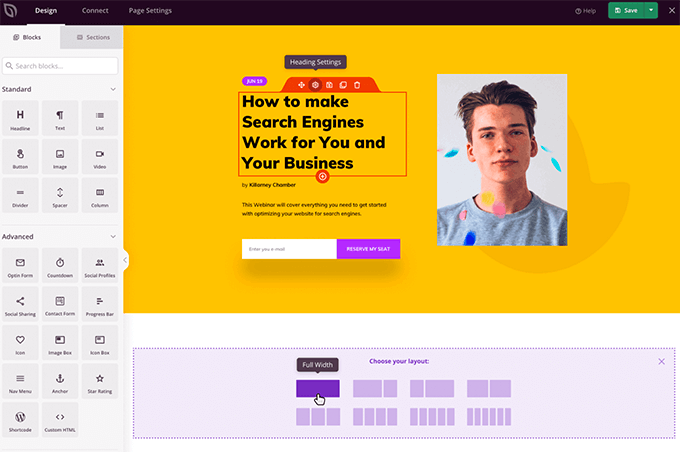
You can also use one of the popular drag and drop WordPress page builders like SeedProd and Divi which allow you to easily create your own custom website designs using a drag-and-drop editor (no coding needed).
Another big advantage of WordPress is that you get access to more than 59,000 free WordPress plugins.
Plugins are like apps for WordPress that let you add additional features and functionality to your website such as shopping cart, contact forms, google analytics, photo gallery, social media tools, live chat, CRM, CSS customization, etc.
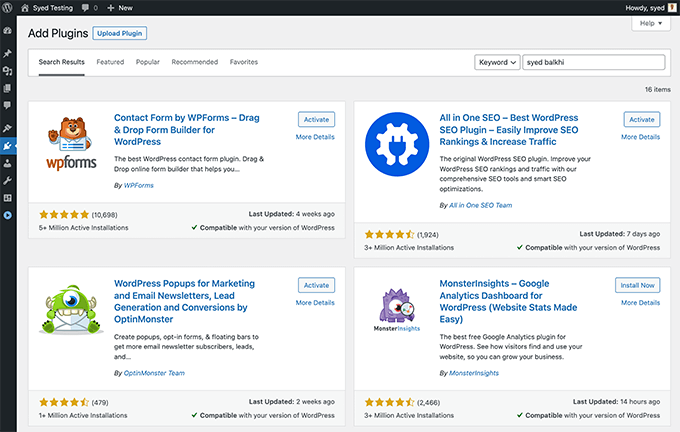
WordPress plugins also make it easy for you to connect & integrate your website with popular business tools, so you can automate and streamline your daily operations.
Another big reason why WordPress is popular across the world is because their website builder is fully translated in over 75+ languages, and it allows you easily create multilingual websites.
When you consider all the above benefits, WordPress is by far the most powerful website builder in the market.
It also comes with robust SEO tools that search engines love, and this ensures your website will always get the highest rankings in search engines. We use and recommend All in One SEO plugin for WordPress because it will help you outrank your competitors in Google.
For all the reasons above, our experts rate WordPress as the #1 website builder and content management system for business owners, bloggers, web developers, and web designers.
Cons:
You will have to manage your own website, which means you will need to familiarize yourself with a new system. This slight learning curve is easily overcome by most users, but it does feel a bit difficult in the beginning.
You will also have to keep up with WordPress updates, plugin updates, and create website backups. All of this can be automated by your WordPress hosting provider.
Pricing:
While WordPress is a free website builder, you will need a domain name and web hosting to get your website live which typically costs $14.99/year and $7.99 per month respectively.
Fortunately, we have worked out a special deal for WPBeginner readers. You can start a website for only $2.75 per month with Bluehost, an official WordPress recommended hosting provider. They are offering our users 69% off on web hosting that comes with free SSL certificate, free domain name, great uptime, and 24/7 phone support.
11. WordPress.com

WordPress.com is a blogging platform and website hosting service run by Automattic. It is created by Matt Mullenweg, the co-founder of WordPress open source software, hence the name WordPress.com.
To learn more, see our article on how are WordPress.com and WordPress.org related.
WordPress.com is not the same as self-hosted WordPress.org that we mentioned as our #1 website builder. Instead this is a customized hosting solution primarily focused on blogging. Please see our comparison of WordPress.com vs WordPress.org for more details.
Pros
WordPress.com is a website hosting service built on top of the same WordPress software but with a totally custom user experience. You don’t have to worry about the software and backups as WordPress.com takes care of it.
Their free and paid plans have different set of features. All plans allow users to choose from hundreds of free and paid WordPress themes. You can then use the built-in customizer to add your site title, use widgets, add navigation menus, and so on.
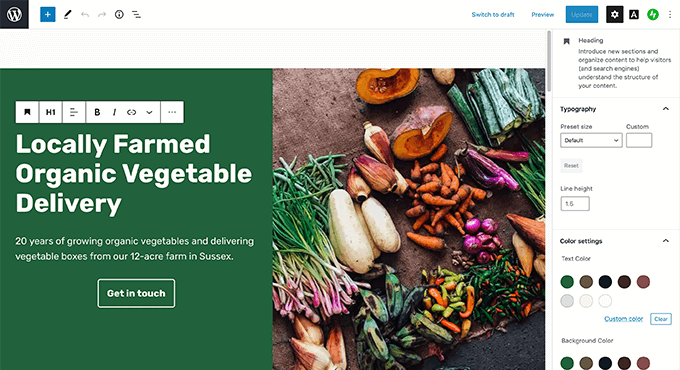
It doesn’t offer the same drag and drop functionality of other website builders. However, you can easily customize designs to a certain extent.
It does comes with powerful editing tools that bloggers find really helpful.
Cons
You cannot install custom plugins or themes unless you upgrade to their business plan.
Premium and lower plans do not have eCommerce features or third-party ad network support. With the business plan, you can use WooCommerce, install WordPress plugins, and third-party ad networks. However, you will still have to follow WordPress.com’s terms and conditions.
Pricing
WordPress.com free plan is extremely limited. Their personal plan starts with $4 per month billed annually and includes a custom domain. Premium plan costs $8 per month billed annually, and it gives you the ability to monetize your site and advanced design customization.
But to really build professional websites, you’ll need either their Business plan ($24 per month) or their eCommerce plan ($45 per month) which is far more expensive than self-hosted WordPress.
Wix.com is another popular cloud based website builder software. It offers ease of use combined with a powerful set of features to easily build your website. Over 1.9% of all websites use Wix as their website builder.
Pros
Wix website creator is a fully hosted platform, so you will not have to pay for hosting. You get access to hundreds of templates to choose for your website’s design. Each template is fully editable with their intuitive drag and drop site builder.
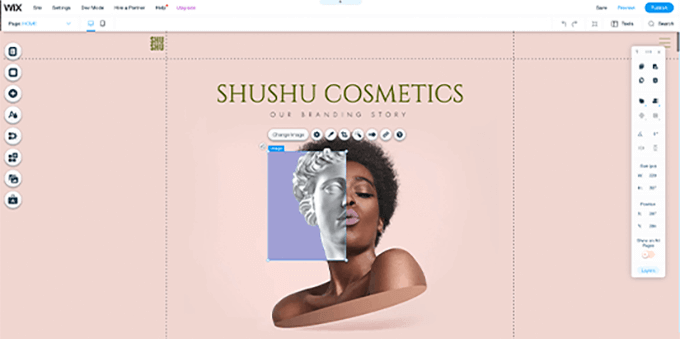
Wix has also built an artificial design intelligence (Wix ADI) that can design a beautiful website for you.
Aside from tons of templates, Wix also comes with dozens of free and paid apps that you can install on your website. These apps allow you to add new features and functionality to your website. Some of them are created by Wix, and others are created by third-party developers.
Wix offers a free plan with limited bandwidth and storage. However, you can use this plan to test drive their drag and drop website builder. It does not include a domain name, so if you decide to keep your website, then you may want to upgrade to a premium plan.
You also get a free SSL with all Wix plans, but you will need to turn it on for your website.
Cons
Free and Connect Domain plans will show Wix branded ads on your website. You’ll need to upgrade to their Combo or Unlimited plan to remove those ads.
If you ever decide to move your website away from Wix, then you will find it quite complicated to do so.
Their Connect Domain plan which costs $9.16 per month only lets you connect a custom domain name, so you’ll still have to buy a domain name separately.
Pricing
Wix offers a limited free version with a Wix branded sub domain. You can connect a domain for $9.16 per month. Their combo plan starts at $14 per month and will get you a free domain name. The eCommerce plan for online stores start at $23 per month.
If you are interested in how it stacks up against WordPress, then see our comparison of Wix vs WordPress.
4. HubSpot Website Builder

HubSpot Website Builder is a powerful content management platform that’s built for marketers and small business owners. It combines the power of their drag & drop website builder, marketing automation tools, and CRM, so you can deliver a personalized digital experience to your users.
Pros
HubSpot is known for being one of the world’s leading marketing automation and CRM platform in the world. After listening to small business concerns, they have decided to create an all-in-one website builder that helps you create a website in minutes (without hiring a developer).
You can use their conversion optimized website templates to quickly build a website that deliver results.
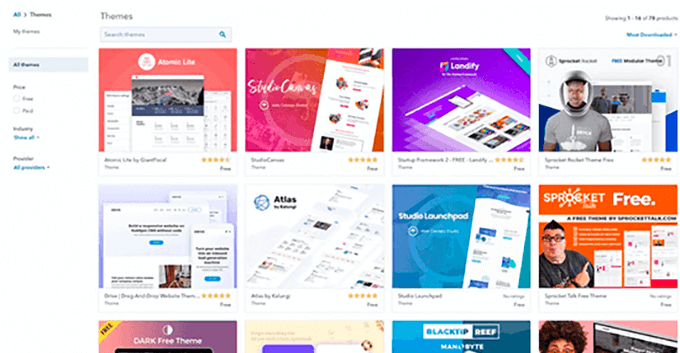
Alternatively, you can use their easy drag-and-drop editor to create a custom website design within minutes.
The best part about HubSpot’s website builder is that they let you do adaptive testing, so you can choose up to five variations of a page, and HubSpot will monitor & serve the best performing option.
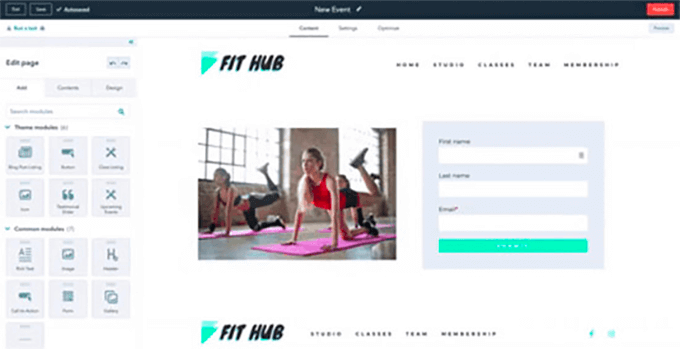
HubSpot website builder seamlessly integrates with their CRM platform, so you can leverage the customer data to create a completely personalized digital experience for each website visitor.
It comes with many other powerful features including SEO tools, powerful analytics, blogging tools, live chat software, email marketing feature, multi-language content support, and more.
Considering the features in their integrated marketing platform, HubSpot is definitely one of the best professional website builders in this list for marketers and small businesses.
Cons
While HubSpot allows marketers to build personalized digital experiences, the platform is best suited for landing pages and simple business websites. For online stores and advanced business websites, you’re better served with WordPress.
The good thing is that HubSpot recognizes this as well, and this is why they have a free WordPress plugin that allows you to seamlessly integrate with WordPress to offer the best of both worlds.
HubSpot is a very powerful platform that comes with a lot of features. This can be intimidating for small business owners who’re just getting started. As long as you’re committed, their account executives will work with you to ensure that your business succeed online.
Pricing:
HubSpot offers a powerful free website builder that not only allows you to create a website, but also gives you a suite of marketing automation tools like CRM, email marketing, live chat, and more.
You can get started for free, and as your business grows you can choose from the package that best suits your needs.
Their paid plan prices start from $45 per month for the Starter plan which gives you all their business tools including: CMS (website builder), marketing hub, sales tools, and business operation tools.
All plans come with 24/7 live chat and phone support, and their support team is really helpful.
HubSpot is a great choice for small businesses who’re looking for an integrated website builder platform that has all the small business tools they need
E-commerce 👇
5. WooCommerce

WooCommerce is the most popular eCommerce website builder on the planet to start an online store. It’s an open-source eCommerce software built on top of WordPress.
According to our expert research, 8.8% of all websites on the internet are using WooCommerce as their eCommerce website builder making it twice as large as Shopify.
Pros
WooCommerce is the best website builder for eCommerce sites because it gives you complete control over your website.
It comes with every feature you could possibly imagine for running a successful online store.
You can accept online payments using WooCommerce Payments or integrate with over 83 other payment options including Stripe, PayPal, Square, Authorize.net, AmazonPay, AfterPay, Klarna, Apple Pay, Google Pay, and more.
Unlike Shopify, WooCommerce doesn’t charge extra transaction fees if you choose to use other payment solutions.
They also offer dozens of extensions to help you with shipping, delivery, fulfillment, sales tax management, inventory management, and just about every aspect of store management.
You can build custom sales funnels and product landing pages using SeedProd, create an affiliate program using AffiliateWP, show real-time social proof with TrustPulse, offer free shipping or run BOGO deals using Advanced Coupons, set special wholesale prices with WholeSale suite, add order bumps and upsells with BuildWooFunnels, and do basically everything else you can imagine.
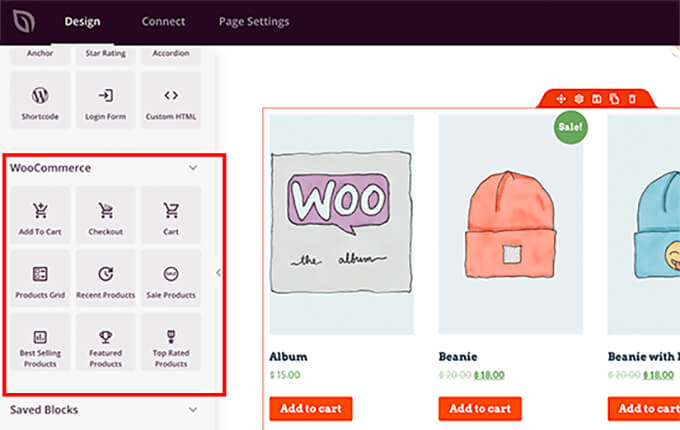
WooCommerce seamlessly integrate with all popular email marketing services, analytics platforms, live chat software, helpdesk software, and conversion optimization tools.
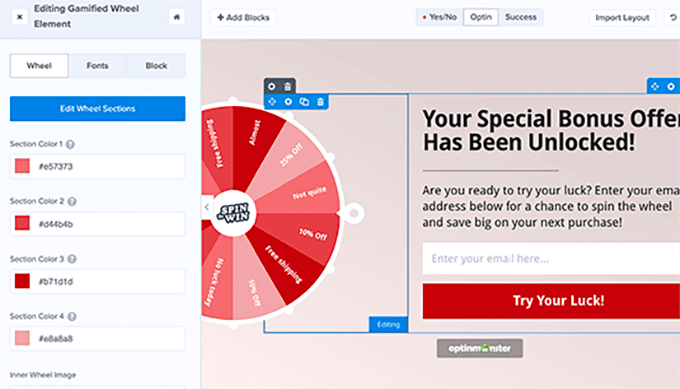
You can reduce cart abandonment and boost sales conversions by adding gamification from the OptinMonster plugin for WooCommerce.
Aside from that, WooCommerce is extremely SEO friendly, and you can further improve your eCommerce SEO by using the AIOSEO plugin.
The amount of freedom and flexibility WooCommerce offers simply cannot be put in words. To see more details, see our full list of best WooCommerce plugins and best WooCommerce themes.
For all the reasons above, our experts rate WooCommerce as the best website builder for eCommerce.
Cons
Just like WordPress, WooCommerce is a self-hosted eCommerce platform which means you will need to familiarize yourself with a new system.
You will be response for keeping WooCommerce updated, create website backups, and perform routine website maintenance tasks. Most of these tasks can be automated by WooCommerce hosting providers like SiteGround, Bluehost, WP Engine, and others.
Pricing
WooCommerce is a free eCommerce website builder, but you will need a domain name and web hosting to get your online store live.
This cost will vary based on your website traffic and popularity.
You can start as low as $2.99 per month with SiteGround Startup Plan which comes with WooCommerce pre-installed, free SSL certificate, daily website backups, free CDN, auto-updates, and enhanced security
2:
10. Shopify

Shopify is another popular eCommerce website builder designed specifically for online stores and eCommerce websites. It powers millions of online stores across 175 different countries. Over 400 Billion dollars worth of products have been sold on Shopify’s platform.
According to our expert research, 4.4% of all websites on the internet are using Shopify as their eCommerce website builder.
Pros
Shopify is an all-in-one fully hosted eCommerce software, this means you don’t have to worry about managing software, installing updates, or keeping backups. Shopify does all that for you.
It offers an integrated payment solution called Shopify Payments which lets you accept credit cards. You can also add third-party payment gateways to accept payments.
As an ecommerce website builder, Shopify comes with full inventory management, unlimited products, powerful stats, easy marketing solutions, all neatly wrapped under one roof. They have hunereds of designs to choose from, and you will never need to add code.
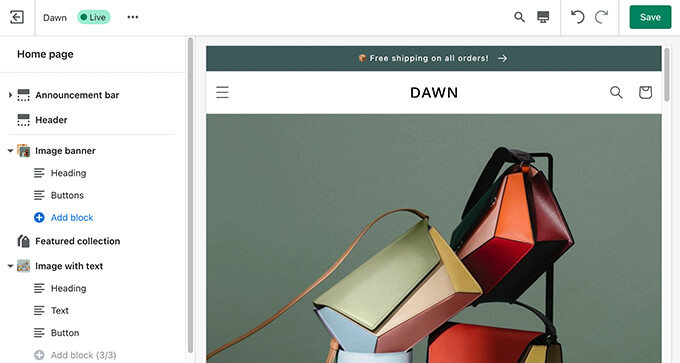
With its intuitive drag and drop interface, Shopify makes it super-easy to create a full-fledged online store.
They also offer in-store POS, which allows you to sell products at your location, while accepting all credit cards and taking advantage of Shopify’s inventory, shipping, marketing, and stats management tools.
Cons
Shopify forces you to use their Shopify Payment platform. If you want to use your own payment processing solution, then they charge an additional 2% transaction fee which is really high.
If you are just starting out, then you may find Shopify’s pricing a bit higher than some other website builders in this list. For more details, see our Shopify vs. WooCommerce comparison.
If you ever want to move your website away from Shopify, you will find it quite difficult to do so.
Update: due to popular request, we have created a step-by-step tutorial on how to switch from Shopify to WooCommerce. Our team built a free migration tool that does the work for you.
Pricing
Shopify’s basic plan will cost you $29 per month. You can upgrade it to Shopify for $79 per month or Advanced Shopify for $299 per month. Shopify also offers a Shopify Lite plan for $9 per month, which basically allows you to add a buy button on any website.
If you want a hassle free ecommerce website builder, then Shopify may be the perfect option for you.